

The U.S. real estate market is entering 2026 with renewed optimism. After years of volatility, stabilizing mortgage rates and robust economic fundamentals are creating lucrative opportunities for savvy investors. Whether you’re a high-income professional exploring passive real estate investing or a physician considering real estate investing for doctors, understanding which markets offer the best risk-adjusted returns is crucial.
Commercial real estate investment activity is projected to surge 16% in 2026 to $562 billion, signaling strong institutional confidence. For individual investors, the key is identifying cities with powerful economic drivers, favorable demographics, and rental demand that outpaces supply.
What Makes a City Investment-Worthy in 2026?
The most profitable real estate markets share four critical characteristics:
- Job & Population Growth: Cities attracting major employers see sustained rental demand
- Favorable Price-to-Rent Ratios: Strong cash flow potential without overvaluation
- Economic Diversification: Multiple industry sectors reduce recession risk
- Landlord-Friendly Regulations: Enabling efficient property management
Based on comprehensive market analysis from CBRE, Zillow, and NAR economists, here are the ten cities positioned to deliver exceptional returns.
1. Hartford, Connecticut
Hartford tops Zillow’s hottest markets list for 2026, with home prices expected to climb over 10%. The insurance industry hub benefits from Northeast migration trends and relative affordability compared to Boston or New York. Median home values around $300,000 offer accessible entry points, while professional tenant demand keeps vacancy rates exceptionally low at under 5 days on market.
Investment Focus: Multifamily properties near downtown and single-family homes in West Hartford for rental income.
2. Dallas-Fort Worth, Texas
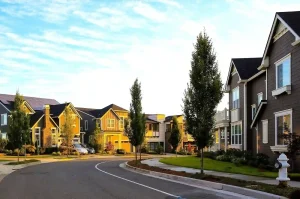
DFW ranks #1 in PwC’s Markets to Watch, driven by corporate relocations from California and massive infrastructure investment. With 2.5% annual population growth, the metro area creates 100,000+ jobs yearly across technology, healthcare, and logistics. Cap rates of 5-7% combined with 8-12% annual appreciation make this a dual-strategy market for both cash flow and equity growth.
Investment Focus: Single-family rentals in Plano and Frisco; multifamily near tech corridors.
3. Phoenix, Arizona
The Sun Belt leader continues its expansion with manufacturing and tech sector diversification. Median rents exceeding $1,500 and affordable acquisition costs ($400,000 median) create strong cash-on-cash returns. Phoenix offers something for every strategy—from student housing in Tempe to luxury rentals in Scottsdale commanding $3,000+ monthly.
Key Consideration: Factor cooling costs into cash flow projections; summer utilities can reach $300-400 monthly.
4. Nashville, Tennessee
Music City’s transformation into a healthcare and tech hub has driven 7-8% annual rent growth. No state income tax enhances net returns, while diverse tenant profiles—from Vanderbilt professionals to entertainment industry workers—reduce vacancy risk. Properties in East Nashville and The Gulch demonstrate 10%+ annual appreciation.
Investment Focus: Mix of long-term rentals and carefully regulated short-term rentals near downtown.
5. Charlotte, North Carolina
As America’s second-largest banking center, Charlotte provides recession-resistant demand from Bank of America and Wells Fargo employees. Median home values around $390,000 with rents of $1,400+ create healthy 5-6.5% cap rates. Suburban markets like Concord offer entry points under $350,000 while maintaining strong appreciation potential.
Investment Focus: Single-family homes near top-rated schools for corporate relocations.
6. Raleigh-Durham (Research Triangle), North Carolina
Universities and Research Triangle Park create perpetual tenant renewal cycles. Biotech, pharmaceutical, and tech sectors provide high-income professionals willing to pay premium rents ($1,300-1,600). This market’s stability—3-5% consistent appreciation—makes it ideal for conservative long-term holds with minimal volatility.
Investment Focus: Properties within 15 minutes of RTP and university campuses.
7. Tampa Bay, Florida
Dual income streams define Tampa’s appeal: traditional rentals fueled by finance/healthcare jobs, plus short-term vacation rentals near Clearwater Beach. No state income tax and 4-6% rent growth create compelling returns. Properties in Brandon and St. Pete show 5-7% cap rates with strong appreciation potential.
Critical Factor: Hurricane insurance adds $2,000-5,000 annually; build reserves accordingly.
8. Indianapolis, Indiana
The ultimate cash flow market. Median home prices under $260,000 with rents around $1,200 generate 7-9% cap rates—among the nation’s highest. Healthcare jobs from IU Health and Eli Lilly provide stable tenant base. Perfect for investors prioritizing immediate positive cash flow over aggressive appreciation.
Investment Focus: Single-family homes in Broad Ripple and Fountain Square.
9. Richmond, Virginia
Colonial capital turned tech hub shows 2.9% home value growth with lightning-fast sales (9-day average). Proximity to Washington D.C. without the premium pricing attracts young professionals. Median values around $330,000 provide accessible entry with reliable $1,200-1,400 rents.
10. Denver, Colorado
Mountain lifestyle meets tech innovation. Aerospace, renewable energy, and technology sectors drive 2-3% annual population growth. Properties near light rail and walkable neighborhoods command $1,500-1,800 rents with 6-7% cap rates. Factor winter maintenance and property condition—tenants expect modern amenities.
Investment Focus: Multifamily near transit hubs; single-family in Aurora and Littleton.
Making Your 2026 Investment Decision
The best city depends on your strategy:
- Cash Flow Priority: Indianapolis, Phoenix
- Appreciation Focus: Dallas, Miami, Charlotte
- Balanced Approach: Raleigh-Durham, Denver, Nashville
- Passive Investment: Consider syndications in Dallas or Phoenix markets
With home sales projected to increase 14% nationwide and multifamily fundamentals remaining healthy, 2026 offers the first genuine growth year since the pandemic. Position yourself in markets with verified economic drivers, perform rigorous cash flow analysis, and partner with experienced local property managers.
The data is clear: these ten cities combine economic resilience, demographic tailwinds, and investor-friendly fundamentals to deliver superior risk-adjusted returns through the next market cycle.


